

(This article is a much shortened version of a chapter from The Life and Work of Branwell Brontë.)
When Charlotte added her first foreword to Wuthering Heights, after Emily’s death, she added something of an apology, explaining that Emily wrote such a savage and brutal work because she was shy and retiring; she learnt of people through hearsay and gossip, and thus heard the worst of them. Not knowing any better, this ugly face of humanity was the one she portrayed.
This idea of Emily as innocent to the point of ignorance belittles both Emily and her work. But perhaps the idea would have gone away if it weren’t for Branwell’s friends.
The Halifax Guardian, which had printed many of Branwell’s poems, published in 1867 an extract of an article that expressed astonishment that Wuthering Heights could have been written by a woman. The paper received a letter in response from William Dearden, a friend of Branwell’s who claimed to have once heard Branwell read from a novel he had been working on. Dearden claimed:
The scene of the fragment which Branwell read, and the characters introduced into it – so far as then developed – were the same as those in “Wuthering Heights”, which Charlotte Brontë confidently asserts was the production of her sister Emily.
William Dearden
Dearden claimed that Edward Sloane, another friend of Branwell’s from Halifax, agreed with him. And Francis Grundy, Branwell’s friend from the railways, also maintained that ‘Patrick [Branwell] Brontë declared to me, and what his sister said bore out the assertion, that he wrote a great portion of Wuthering Heights himself. Indeed, it is impossible for me to read that story without meeting with many passages which I feel certain must have come from his pen.’
Three men, well-acquainted with Branwell, claimed that he was the true author of Wuthering Heights. Is it possible that they are right, and that Wuthering Heights is the subject of a literary cover-up that has lasted 150 years?
No. It is impossible to be absolutely certain, with no shadow of a doubt, that the manuscript wasn’t written by Branwell’s hand and passed off as Emily’s. But I can be certain enough, because there are three problems with the claim: Branwell’s friends, Branwell, and Emily herself.
We can quickly dismiss the claims made by Branwell’s friends.
Edward Sloane never made his claims publicly. We have only Dearden’s word that Sloane agreed with him, which amounts to nothing more than “don’t believe me? Well my friend thinks so too”. That leaves Dearden’s and Grundy’s claims to deal with.
Perhaps the biggest problem with these claims is the date they were made. Dearden’s was the first, and it didn’t appear until 1867, almost twenty years after Branwell’s death and the publication of Wuthering Heights. How well do you remember a meeting from twenty years ago? Or, better, how well do you remember a book you read twenty years ago? If I now gave you a book under a different name, could you be certain if it was the same one you read twenty years ago?
I’d be amazed if you could.
Francis Grundy’s own claim also came many years later, and is therefore suspect for the same reasons. But, unlike Dearden, Grundy’s motives seem to have been rather less heroic. Rather than defending Branwell’s honour, Grundy was trying to make himself look good.
I made the acquaintance of a genius of the highest order, Patrick Branwell Brontë, who was at least as talented as any member of that wonderful family. Much my senior, Brontë took an unusual fancy to me, and I continued, perhaps, his most confidential friend through good and ill until his death.
Francis Grundy
These words are carefully phrased to flatter Grundy himself more than Branwell. According to Grundy, Branwell is a genius, but Grundy was able to snare his fancy and confidence, suggesting to the reader that Grundy must be terribly interesting.
Such is the flavour of Grundy’s testimony, and so it cannot be trusted. He called Luddenden Foot station ‘a rude wooden hut, with no village at hand’, and claimed that they suffered from ‘few books, little to do, no prospects, and wretched pay’; all claims that are demonstrably untrue.
So we can’t trust Grundy’s testimony either.
But the claim that Branwell was writing a novel is accurate. It just wasn’t Wuthering Heights.
In December 1837 Branwell began a story involving Percy and Maria Thurston, a married woman who naturally is drawn to Percy simply because he is Percy. There is not much to the story and Branwell never finished it. But he did pick it up again in 1845 and began to work it into a longer narrative which is known today as ‘and the weary are at rest’.
‘and the weary are at rest’ is Branwell’s wish-fulfillment, his Don Juan. The married woman is defenceless against the hero’s charms, her only refuge of resistance a sense of duty. This gives Branwell the perfect excuse as to why an affair with Robinson couldn’t progress, or perhaps Branwell invented it himself to explain why he was kept at a distance. Either way, it’s a convenient way of avoiding bruised egos and doesn’t detract from anyone’s charms.
Of course, Branwell could have been written Wuthering Heights at the same time as ‘and the weary are at rest’. But, aside from the difference in quality (‘and the weary are at rest’ is, frankly, not very good), Branwell was too obsessed with his woes with Lydia Robinson. When writing a poem titled ‘Lydia Gisborne’ (Gisborne being Lydia Robinson’s maiden name), he scribbled in the margin: ‘Lydia B–’. Like a lovesick teenager, Branwell was giving Lydia his surname; he simply could not let go of her.
Comparing Wuthering Heights with ‘and the weary are at rest’ reveal two utterly opposed approaches to characters, themes, and even styles.
Percy is a hero or, at least, Branwell’s hero. So while he makes threats of violence, he is all bark and no bite. He is meant to excite us with his dark tempers and his supposedly violent nature, but we are meant to root for him nonetheless. That’s why other characters, and the narrator as well, heap such praise on him; Percy is the best shooter, possesses unmatched musical abilities, and is rich to boot. Even the interminable sequence where Percy tricks the Methodists into letting him and his gang offer hypocritical sermons is meant to awe the reader.
Heathcliff, on the other hand, is no hero. The other characters refer to him as a ‘goblin’, a ‘fiend’, and ‘something other than a man’. While it’s possible to empathise with his desire for revenge on those who did him wrong, readers don’t root for his success.
Heathcliff and Percy love in very different ways. Percy is all words; he rhapsodises over and over about how he would either protect or improve Maria. He repeatedly declares that ‘every sinew would rouse to save your little finger from harm’, or that he would ‘exert my superior bodily strength save to preserve her from harm or my more impetuous temper save to infuse vigour into her mildness.’ It is a very poetical seduction, and Maria is left ‘powerless under the impulse of contenting feelings’.
Heathcliff declares his feelings only through a filter of anger and anguish. ‘I love my murderer’, he says, referring to Catherine, and then asks her ‘would you like to live with your soul in the grave?’ But there are no tender scenes between them, no sweet words. Heathcliff loves, violently and with no tenderness. Percy loves with nothing but tenderness.
Reading ‘and the weary are at rest’, you’ll find it populated with Angrian characters. Alexander Percy, William and Maria Thurston, Quashia Quamina, Robert King (who was S’death), Hector Montmorency, and plenty more.
Wuthering Heights features no Angrian characters. But there is a hint of Gondal, the imagined world Emily shared with Anne. In fact, Juliet Barker suggests Heathcliff has his beginnings in a Gondal character, Douglas, whose origins:
were shrouded in mystery and who was doomed from birth to be blighted by fate; sadistic and cruel, Douglas’ redeeming feature was his passionate love for the ambitious queen of Gondal.
Poetry, both Emily’s and Anne’s, is all that remains of Gondal; the prose is lost, meaning the narrative is difficult to piece together. While some have tried to find stories and characters that foreshadow Wuthering Heights, this is mostly conjecture and hard to rely on. But the poetry itself gives us the heart of Wuthering Heights. Emily writes of a ‘slighted heart’ and one character declares ‘could I know thy soul with equal grief was torn –/This fate might be endured – this anguish might be borne!’, which calls to mind Heathcliff’s reasons for leaving and the cruel passion he shares with Catherine.
And another poem refuses to hate the dead for their sins, asking
Do I despise the timid deer
Because his limbs are fleet with fear?
Or would I mock the wolf’s death-howl
Because his form is gaunt and foul?
One of the key themes of Wuthering Heights is that a person’s nature not only wins out over their surroundings, but that they should be loved despite a foul nature.
There are no such themes or thoughts in Branwell’s Angrian work, but Emily’s poetry shows just how much of Gondal there is in Wuthering Heights.
Branwell was incapable of writing Wuthering Heights. Even if his talent could have risen enough to produce the novel, it contains nothing of interest to him; no Percy, no Lydia, no married women and affairs, no Byronic heroes (no, Heathcliff is not a hero).
But, more importantly, there is no need for Branwell to have written Wuthering Heights. Because the central premise demands that Emily was incapable of writing such a novel because of her sheltered existence.
But what so many of Emily’s detractors forget is that a writer does not need to have seen or experienced a thing to write about it.
Charlotte didn’t need to witness a madwoman locked in an attic to write Bertha Rochester, Anne didn’t need to have a son to write Helen Graham, and Emily didn’t need to experience the tortured, violent love of Wuthering Heights. And so Emily didn’t need Branwell to create Heathcliff and his cohorts.
She only needed her powerful imagination.

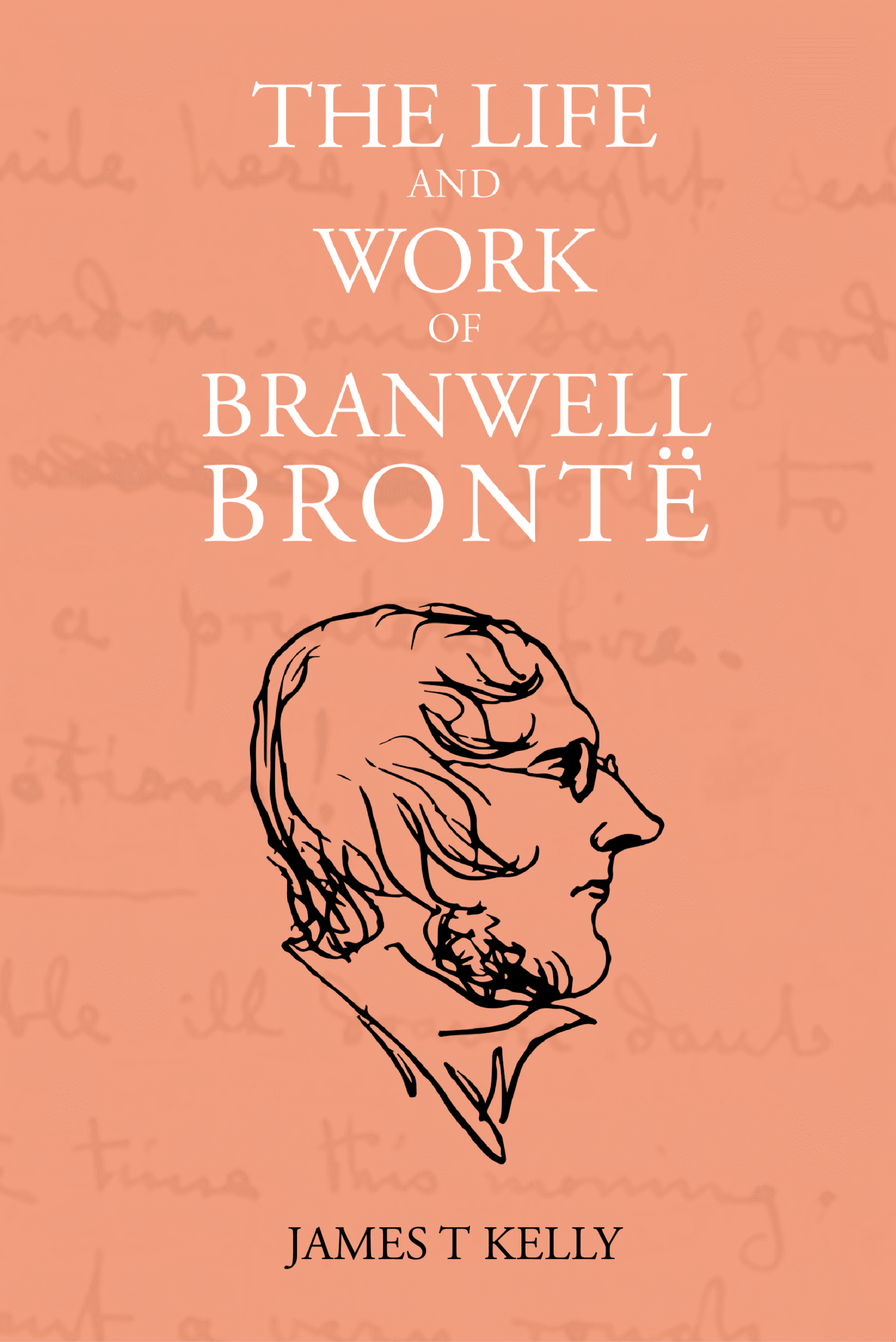
The story of Branwell Brontë has been plagued by misconceptions, lies, and misunderstandings for decades. This incredible new volume seeks to set the record straight.
Discover the truth behind the myths of Branwell’s life, decline, and death. Find out why he doomed himself to anonymity by writing under a different name. Read his work, alongside critical analysis that reveals him to be both the ‘Problem Poet’ and the ‘Byron of Haworth’. And read his letters, collected here for the first time.
Learn the forgotten truth behind the Brontë brother.

★★★★★ “I thoroughly enjoyed this book and I recommend it to anyone who has an interest in the Bronte family and especially in the much maligned Branwell. It explains how some of the myths about him.”
★★★ “The book is very good indeed, and I think offers something for everyone. Certainly, Kelly's exploration of theological themes was very interesting, and has given me plenty to think about with my own work.”
★★★★★ “If you are interested in the Brontë writing family, then you must buy this book. It's interesting and informative.”